Guide
Co-Signer vs. Third-Party Guarantor: Which to Use
A personal co-signer is free; a guarantor company is paid but always available. Compare cost, approval odds, and when each is the right choice.
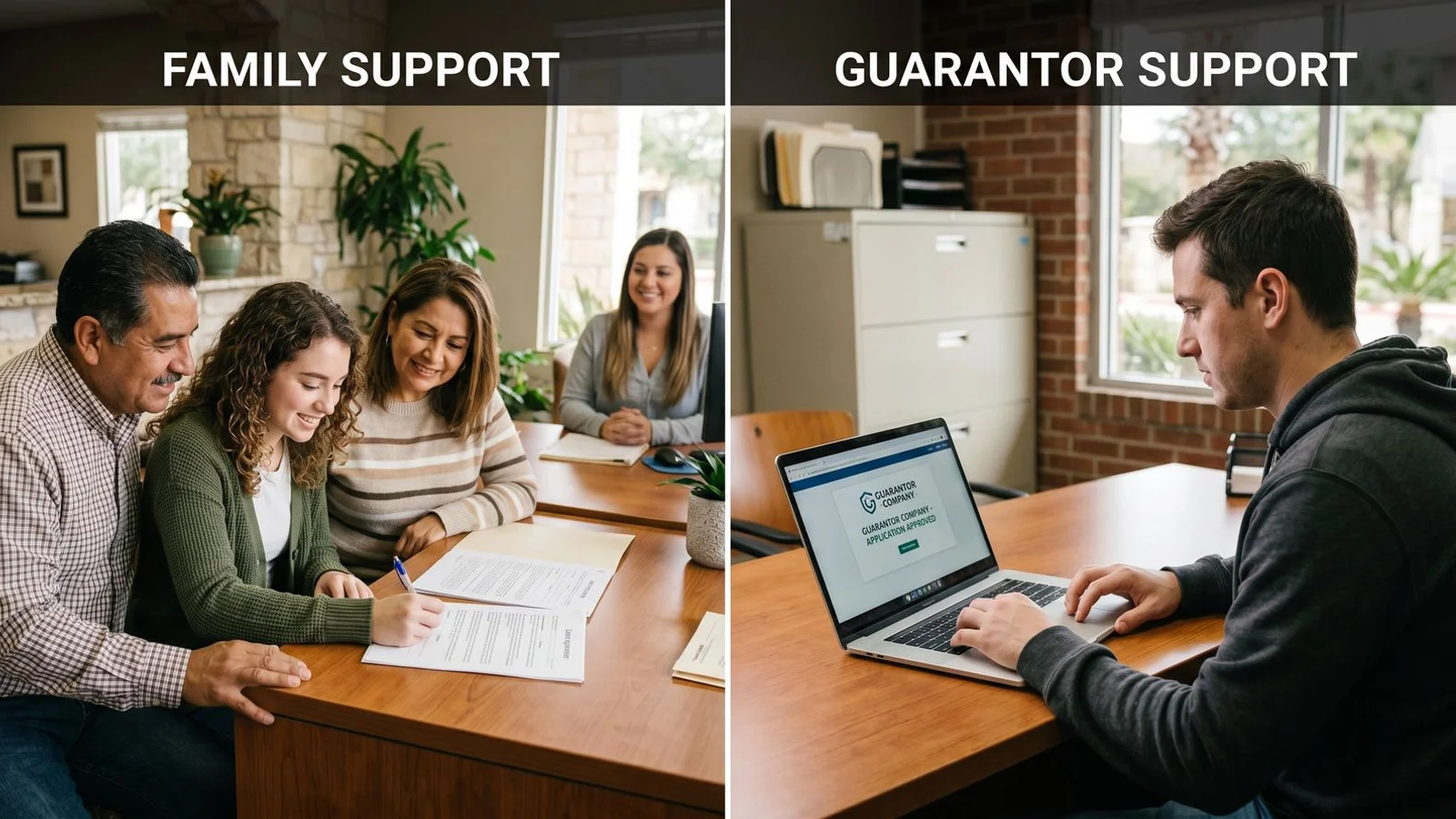
We know how stressful the final steps of securing a lease can be. That awkward conversation about financial backing stops many qualified renters in their tracks.
Our team at San Antonio Second Chance Apartments was established to provide premier apartment locating services with a focus on integrity and client success. The choice between asking a family member or paying a corporate service dictates how quickly you get your keys.
We regularly point clients to our guarantor service page when these roadblocks appear. If you’re leaning toward the corporate route, our breakdown of how third-party guarantor companies work covers the fees and approval process in detail. Reviewing the data for a co signer vs guarantor apartment reveals a clear divide in how property managers handle risk today.
We will break down the specific financial requirements for each path and outline exactly how to proceed in the current San Antonio market.
Side-by-Side
Our agents evaluate risk profiles differently than corporate guarantors do. The table below is a direct lease guarantor comparison that looks at the hard numbers between using a relative and hiring a company like Leap or TheGuarantors in 2026.
Renters often need these side-by-side facts to make a fast decision. We compiled this data to clarify your choices.
| Factor | Personal Co-Signer | Third-Party Guarantor |
|---|---|---|
| Cost to renter | Free | 4.5% to 8% of annual rent (or $300-$1,200 fee) |
| Who is liable | Your family member or friend | A corporate business |
| Credit impact | Yes (co-signer credit is tied to the lease) | None on your relatives |
| Speed | Variable (depends on their document collection) | Fast (usually 1 to 3 days) |
| Underwriting | Community standard (often 650+ score) | Guarantor company standard |
| Availability | Requires a willing person with strong files | Available to most applicants |
| Approval odds | Depends entirely on the co-signer | Higher if you meet the company baseline |
| Renewal impact | Co-signer stays on at renewal | Requires a new fee per lease term |
When a Co-Signer Wins
A personal co-signer works best when a family member is ready to sign immediately. Our experience shows this path saves renters hundreds of dollars in upfront fees.
In June 2026, the average apartment rent in San Antonio sits at $1,072 per month. We remind local clients that property managers typically require a co-signer to prove monthly income of at least three to five times the rent.
That means your friend or relative needs verifiable monthly earnings between $3,216 and $5,360 to qualify. They also need a credit score of at least 650 to pass the standard screening.
Our team recommends this route if you meet a few specific conditions. A personal co-signer is the right choice when:
- A close contact has strong income and a credit score over 650.
- They agree to take full legal responsibility for the lease.
- You want to bypass corporate fees from companies like Jetty or Leap.
- The specific apartment complex accepts personal applications.
When a Guarantor Company Wins
We rely heavily on third-party services for applicants without wealthy relatives. A corporate guarantor provides a clean, fast option without begging family members for help.
Approval decisions happen in as little as 30 minutes. Our leasing agents frequently use companies like TheGuarantors and Leap to get clients approved fast.
These businesses charge a fee, usually ranging from 4.5% to 8% of your total annual rent, to take on your liability. We find this fee is often worth the immediate peace of mind. Corporate backing removes the emotional strain of tying a relative to your housing contract.
A third-party guarantor makes sense when:
- You lack a contact with a 650+ credit score and high income.
- You prefer to keep family out of your financial matters.
- You have the cash to pay the non-refundable fee.
- You need a blazing fast approval decision.
- You want clean lease renewals without bothering a relative again.
When the Community Decides for You
Our team always verifies property rules before letting a client apply anywhere. Some San Antonio communities refuse personal co-signers completely and exclusively accept approved corporate partners.
We check the written rental criteria required by Texas Property Code Section 92.3515. This law forces landlords to disclose exactly who they accept before collecting your application fee. Guessing wrong costs you time and non-refundable fees.
To protect your application budget, verify these three details:
- Does the property accept out-of-state personal co-signers?
- Is there a specific corporate guarantor network they mandate?
- What are the exact credit score requirements for the guarantor?
Our agents see many Class A luxury buildings strictly mandate third-party companies. Other properties accept either option, while a few smaller landlords reject corporate guarantors entirely.
The Hidden Cost of Co-Signers
We see clients overlook the massive financial risk placed on a relative. A personal co-signer is legally bound to pay your rent if you default.
Late payments trigger fast consequences. Our advice is to remember that a single missed payment damages your friend’s credit profile. An eviction stays on a Texas credit report for seven full years.
Current Federal Reserve data shows credit card and loan delinquencies rising in 2026, making lenders extremely strict about any derogatory marks.
We have seen relationships shatter over housing debt that ruined a parent’s chance at a new auto loan. Protecting your personal ties is often worth the cost of a corporate fee.
Our office frequently helps renters transition to companies like Leap after a personal arrangement ends badly. A business transaction keeps family dinners peaceful.
Bottom Line
We want to get you approved with the least amount of friction. Deciding between a co-signer or guarantor comes down to your personal network and timeline.
For renters with a highly qualified, willing family member, a personal co-signer gets the job done for free. Third-party companies offer a fast, clean substitute that protects your relationships.
Our agents are ready to confirm which specific options your target community accepts.
Reach out today to start your lease application. Let the experts handle the heavy lifting.
Need help with this?
Guarantor & Co-Signer Apartment Approval
Helping renters who can't meet income or credit requirements alone qualify through co-signers and third-party guarantor companies.
See How We Help