Guide
How Long an Eviction Stays on Your Rental Record
Evictions can appear in screening for years. Learn reporting timelines, public-record vs. screening data, and what Texas renters can do in the meantime.
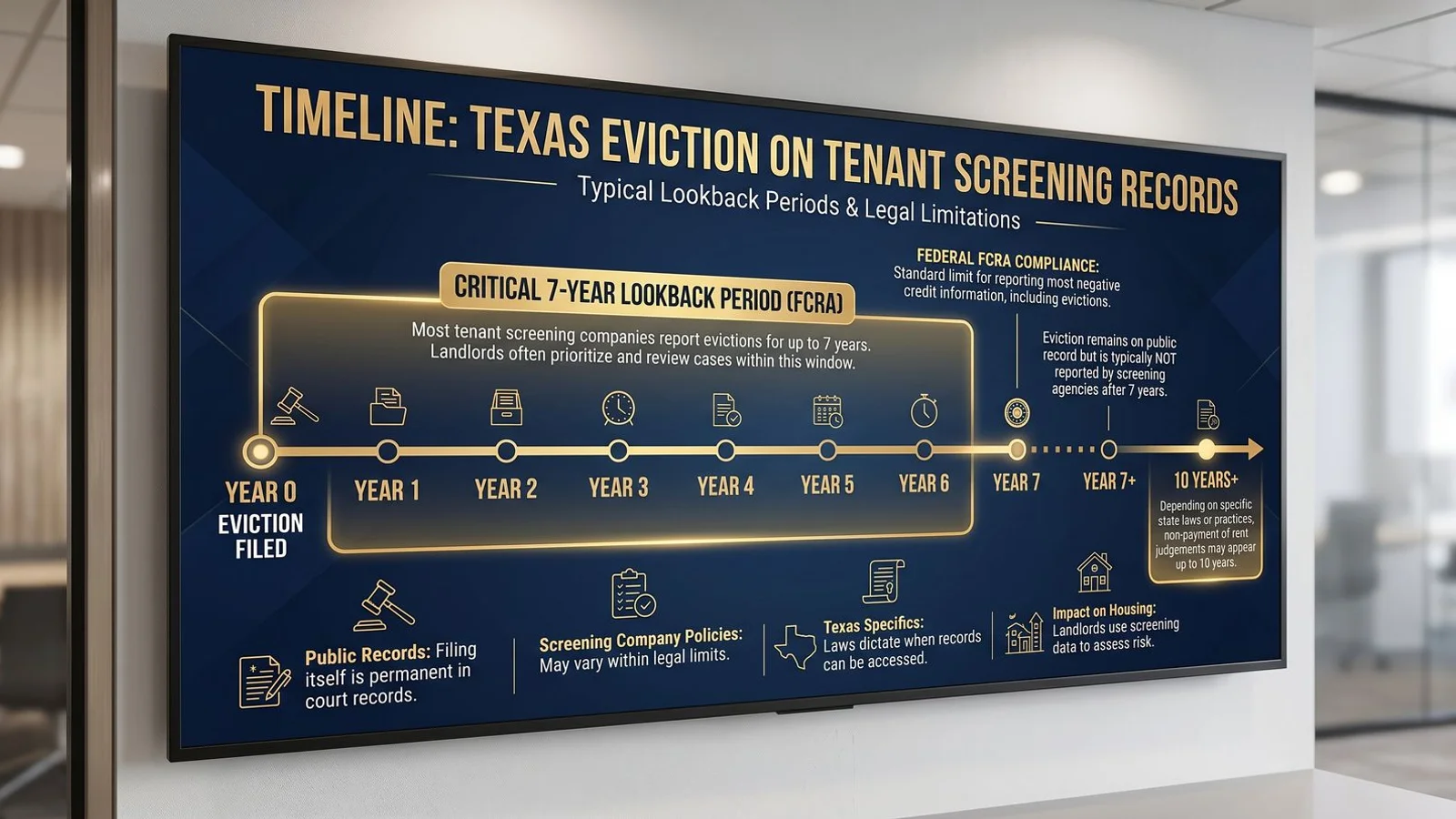
We consistently see renters caught off guard when an old housing dispute resurfaces to block a new lease. When people ask us how long does an eviction stay on your record texas, the answer often feels frustratingly permanent.
Knowledge is your best defense against automated screening software.
Our team at San Antonio Second Chance Apartments focuses on client success and clearing these exact hurdles. Let’s look at the actual data on how these background checks work, outline the exact timelines, and review practical ways to get your application approved anyway.
The General Texas Picture
Eviction records in Texas typically appear on tenant screening reports for up to seven years from the filing date. Understanding how long does an eviction stay on your record texas requires looking at the specific property.
The actual eviction lookback window each San Antonio apartment community uses ranges from three to seven years. We find that some properties use a strict five-year cutoff, while others go back the full seven allowed by federal law. Under the 2026 updates to Texas Property Code Chapter 24, eviction timelines have accelerated. Courts now finalize judgments in as little as 21 days.
This speed means a filing hits the public record almost immediately. A public eviction record texas courts generate remains open permanently under state civil procedure rules. Even if the screening report stops showing it, a sharp leasing manager who searches Bexar County justice court records can still find the case.
| Record Type | Retention Period | Governing Rule |
|---|---|---|
| Tenant Screening Report | 5 to 7 Years | Fair Credit Reporting Act |
| Public Court Docket | Indefinite | TRCP Rule 76a |
Reporting Timelines Vary by Source
Three different systems carry your housing data, and they each follow their own retention clocks. What matters for an application is what shows up on the specific background check the community pulls.
We track how different databases handle this information to help applicants prepare. Data aggregators like LexisNexis and CoreLogic scrape county clerk files nightly to update their systems.
- Tenant screening companies: Software like RealPage, Yardi, and Experian RentBureau typically report filings for five to seven years.
- Credit bureaus: Agencies like TransUnion, Experian, and Equifax keep eviction-related collections visible for up to seven years under the Fair Credit Reporting Act.
- Public court records: Bexar County justice court files remain public indefinitely, though some old paper records require manual retrieval.
Dispute, Don’t Hide
You have the right to dispute inaccurate records on your screening report under the Fair Credit Reporting Act. Successful disputes can get wrong amounts or incorrect case outcomes removed entirely.
Disputes do not remove accurate, factual filings. Hiding a known record on an application always backfires.
We see many applicants try to conceal past issues, only for the automated screening to surface them instantly. The leasing manager will reject the application for falsified information.
The Impact of Paying Old Balances
Instead, check your file for specific errors. If a property debt was paid, ensure the status updated to “satisfied” rather than “open collection.”
A satisfied status still shows for the seven-year window, but it carries far less negative weight during a manual review. If a screening agency ignores your valid dispute, you can file a formal complaint with the Consumer Financial Protection Bureau.
Our advisors always suggest pulling your own file before paying an application fee. Knowing exactly what a manager will see gives you the upper hand.
What You Can Do Now
While the eviction lookback window runs, the most useful moves are settling open balances and rebuilding your rental history. Taking proactive steps gives a leasing manager reasons to approve you despite the past.
We recommend treating your application like a business proposal. Small actions right now significantly improve your approval odds at properties with flexible criteria.
- Settle any open balance. Paying off the debt reduces a separate collection hit on your credit score.
- Build a clean history. Two years of on-time rent at your current address proves stability.
- Draft an explanation. Have your case number, final disposition, and a factual Letter of Explanation ready for the manager.
- Pre-screen communities. Find the exact properties that use a three-year manual review rather than a strict seven-year automated rejection.
If you are currently facing an unfair filing in San Antonio, groups like Lone Star Legal Aid offer free representation to eligible tenants.
We have watched prepared applicants win approvals by simply presenting a clear, factual Letter of Explanation alongside their application. Taking ownership of the situation goes a long way with a reasonable property manager.
When the Window Closes
Once the eviction falls off the screening report, most communities treat the application as a clean file. Understanding exactly how long does an eviction stay on your record texas gives you the clarity to plan ahead.
Until then, second-chance leasing is the most effective route. Our team works directly with San Antonio properties that evaluate the whole applicant instead of just a software score. You do not have to wait seven years to find a quality place to live.
See our how to rent after an eviction guide for the step-by-step, and our broken lease and eviction friendly service for our full approach.
Need help with this?
Broken Lease & Eviction Friendly Apartments
Matching renters with a broken lease or eviction to communities that approve them, with conditional-approval and deposit guidance.
See How We Help